


Sign language has a long history that goes far beyond simple hand gestures. From ancient forms of communication to its recognition as a fully developed language, its journey reflects the struggles and achievements of Deaf communities around the world.
Ancient Roots of Communication
The use of gestures dates back to ancient times. In ancient Greece, philosophers such as Socrates discussed how people could communicate through movements of the hands and head. However, sign language was not yet widely understood or recognized as a structured language.
Pioneers of Deaf Education
A major turning point came in 18th-century France, when Abbé de l’Épée established a public school for Deaf students in Paris. By combining natural signs used by Deaf people with a more structured system, he helped shape the development of French Sign Language and influenced Deaf education worldwide.
The Dark Era of Milan 1880
In 1880, the Milan Congress marked a difficult chapter in Deaf history. The conference favored oral education, discouraging the use of sign language in schools. This decision marginalized sign language in education for decades and had a lasting impact on Deaf communities.
The Linguistic Revolution
In 1960, linguist William Stokoe published groundbreaking research demonstrating that American Sign Language (ASL) has its own linguistic structure and grammar. His work challenged the belief that sign language was merely a collection of gestures and helped establish it as a legitimate language.
Global Recognition Today
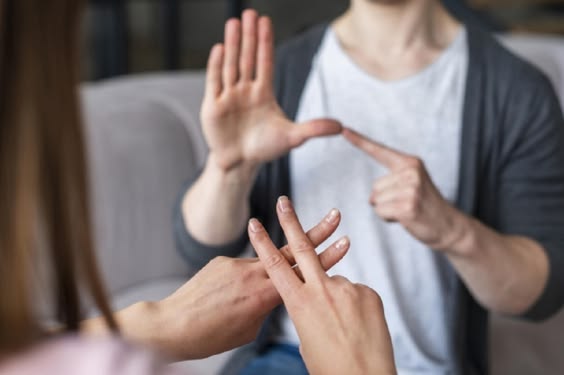
Today, the United Nations recognizes September 23 as the International Day of Sign Languages. Sign languages are not universal; each country and community has its own, including BISINDO in Indonesia. Learning sign language is more than learning to communicate—it is a step toward building a more inclusive society.
Final Thought
Sign language is not simply a way to express words through gestures. It is a language, a culture, and an essential part of human connection.
Communication becomes meaningful when everyone has the chance to be heard.


